
How to start a business networking group
A practical guide for organizers: from the first meeting to a group members don't want to miss.
To start a business networking group, decide who it's for and what members will get from it, invite a small founding group of people you'd recommend, and pick a meeting rhythm you can keep. Give every meeting a simple structure: introductions, a few member spotlights, and time for members to ask for and give referrals. Keep track of who was introduced to whom, so members can see the group working. As it grows, give members a shared place to find each other's businesses and send requests, so introductions don't depend on the next meeting.
1. Decide who it's for
A group for "local businesses" is hard to make useful. A group for independent professionals who serve homeowners, or for women founders in one city, gives members a reason to refer each other. Decide:
- Who belongs: the type of business, the stage, the place.
- What members get: referrals, advice, visibility, or all three.
- One per profession, or open? Some groups allow one member per profession so members don't compete for the same referrals. Others stay open and let quality decide.
2. Start with a small founding group
Invite people you'd recommend yourself. A handful of committed founding members is better than a big list that doesn't show up. Ask each of them who they'd want in the room, and grow from there.
A first-meeting invitation you can adapt
"I'm starting a small group for [who it's for] in [place]. We'll meet [how often] to introduce our businesses and send each other referrals. The first meeting is [date and place], about an hour. Would you join, and is there someone you'd want in the room?"
3. Pick a rhythm you can keep
- Weekly keeps momentum but takes real commitment.
- Monthly is easier to sustain and works well for busy owners.
- In person or online: in person gives people time for informal conversation; online makes it easier to attend. Many groups mix the two.
4. Give every meeting a structure
- Short introductions: who you are and who you're looking to meet.
- A member spotlight: one or two members explain their business and what a good referral looks like.
- Asks and offers: members say what they need, and others offer introductions. A good ask is specific: "I'm looking to meet the office manager at a dental practice nearby."
- Follow-up: who will connect with whom before the next meeting.
5. Make referrals visible
A simple record lets members see which introductions happened. Keep track of introductions and requests, and share what happened at the next meeting. Thank the people who made introductions.
6. Keep it useful as it grows
Once the group is bigger than one room, introductions start falling through the cracks. Members forget who does what, requests get lost in group chats, and new members don't know who to ask.
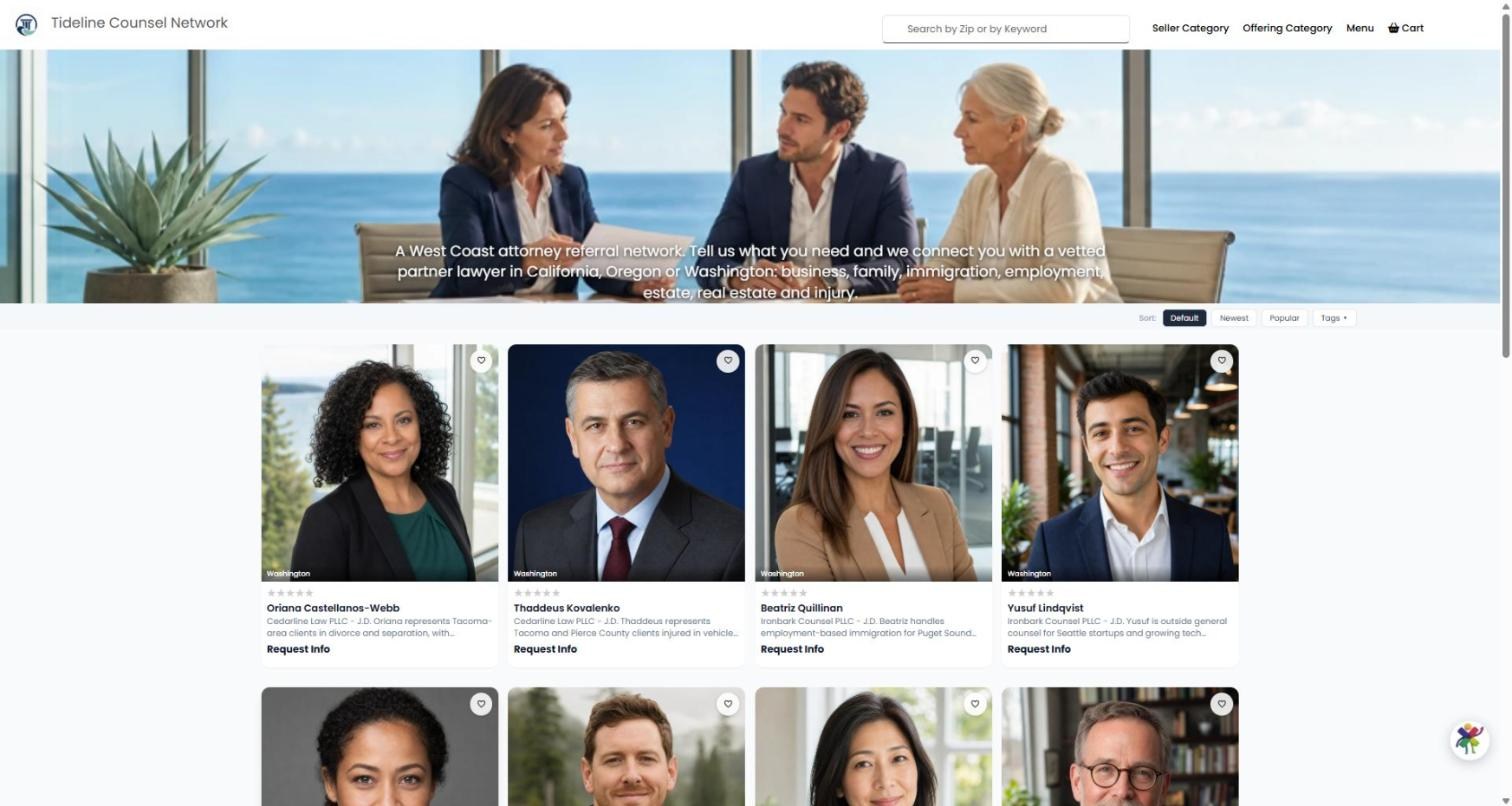
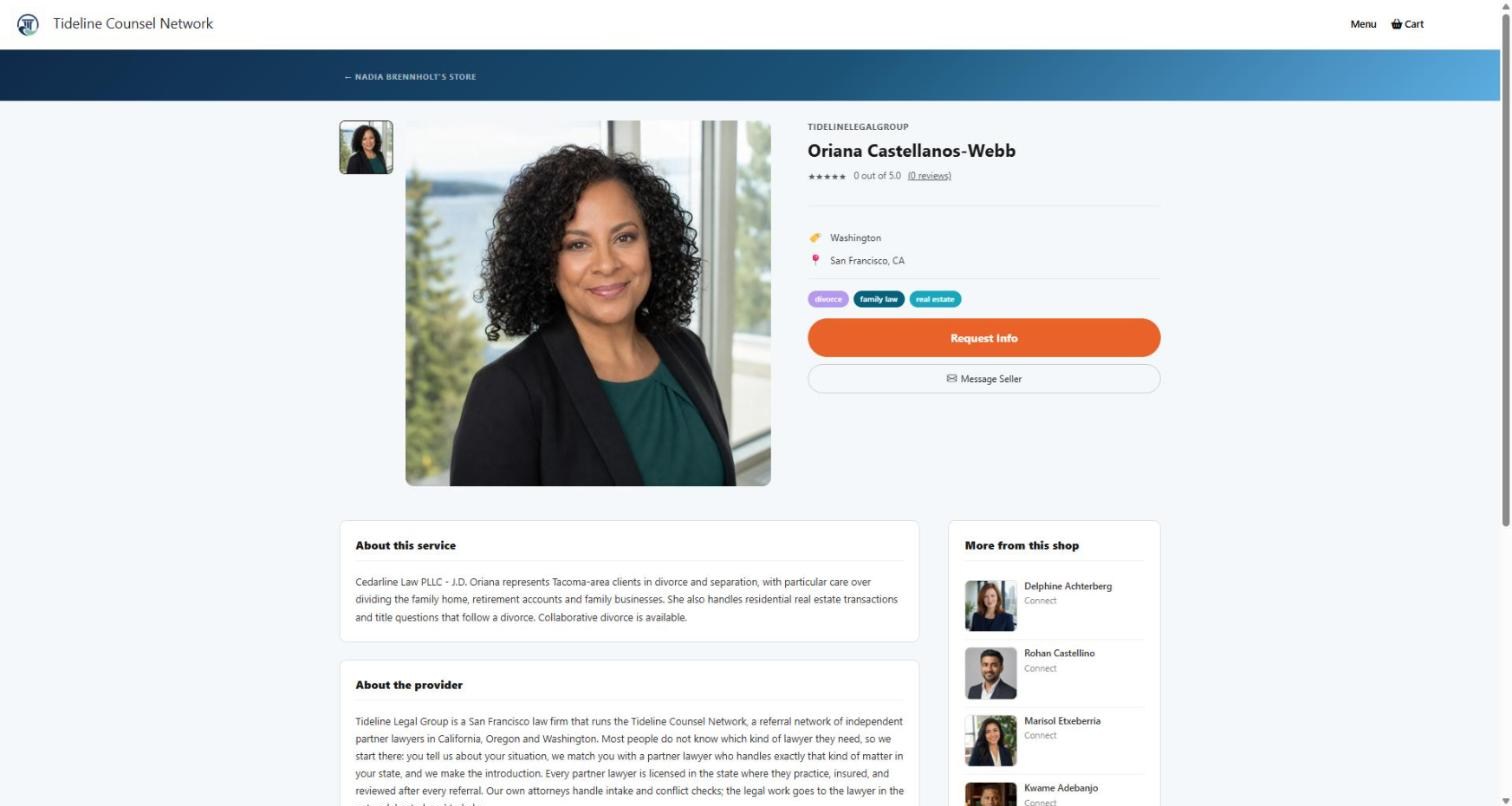
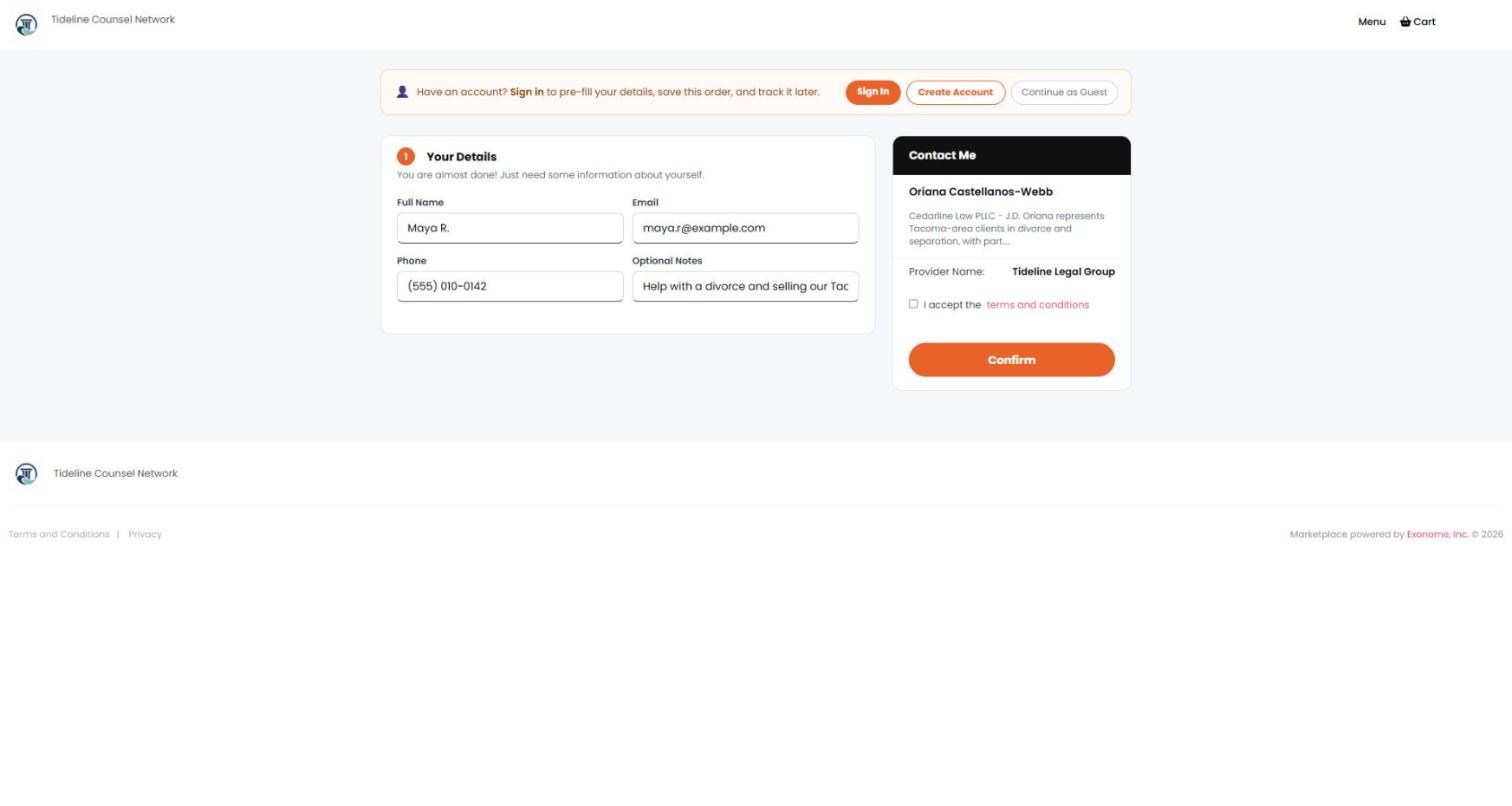
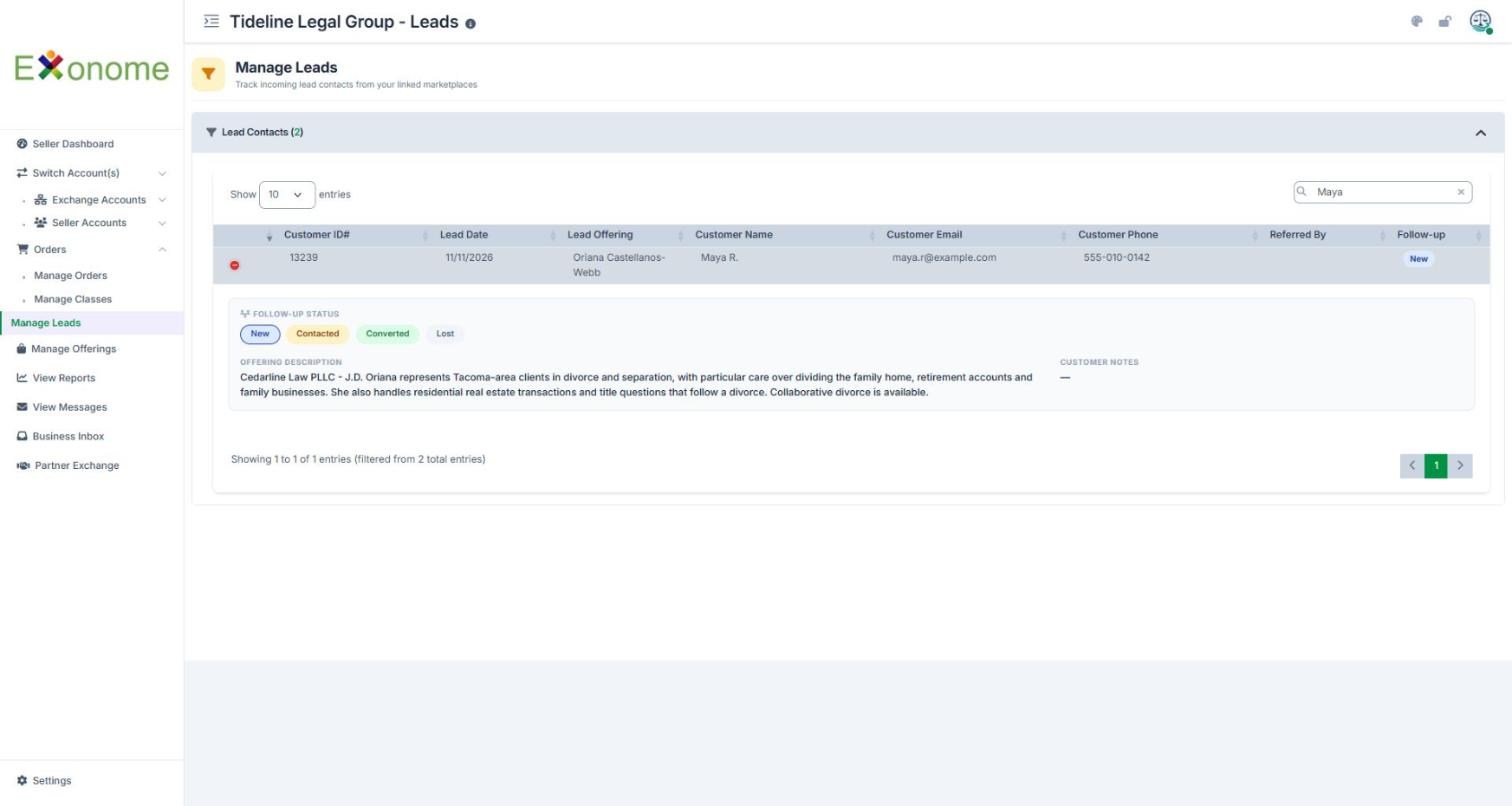
That's the point to give the group a shared place to find each other: a directory of members' businesses, and a way to send requests to the right member instead of hoping someone sees a message. With Exonome, you decide who can list, approved providers keep their own listing details up to date, and members can send an inquiry straight to the business they need.
Here is what that looks like on a demo referral network. Tideline Counsel Network is a demo; the attorneys and firm are fictional.
Running a bigger network, or several groups? Build a marketplace for your community or see member marketplaces for associations and chambers.